

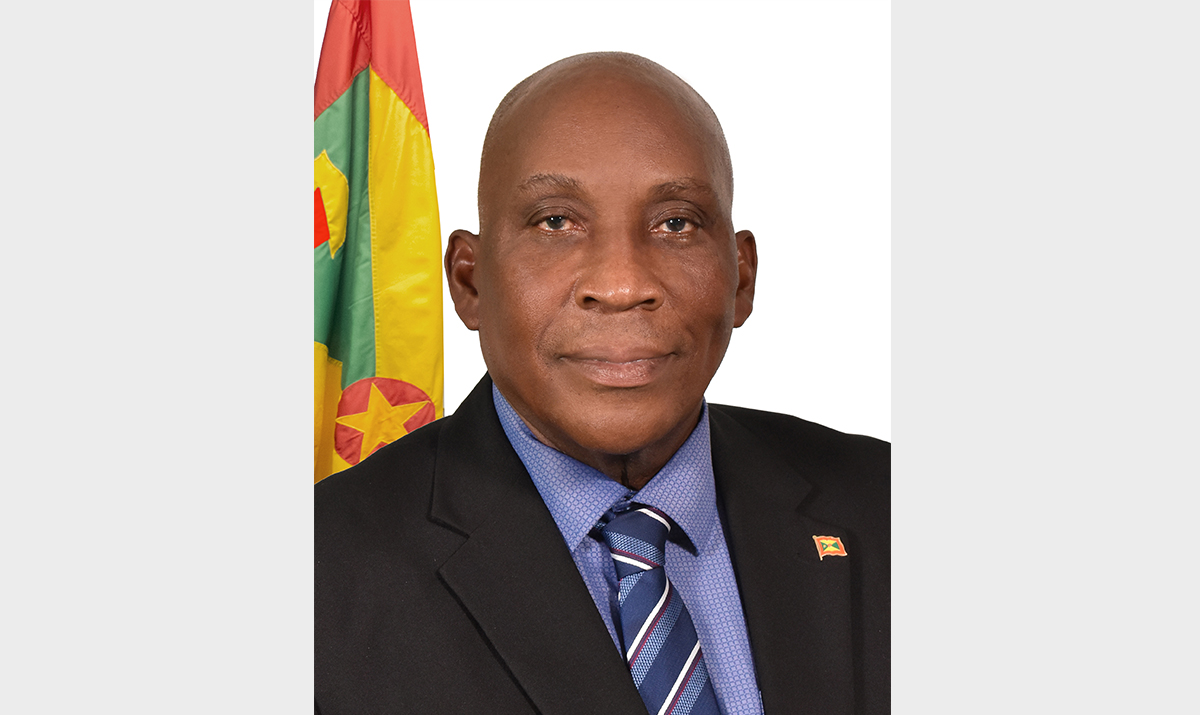
04 Jun Interview with Hon. Dennis Cornwall, Minister for Finance, Grenada
Business Focus: Grenada’s economy has been growing at nearly 4% in 2023 and is set to maintain steady growth in the year ahead. What measures are being implemented by your ministry to sustain and potentially increase the economic development in the country?
Let me first say that the Ministry of Finance’s work is a crosscutting operation that crisscross many of our ministries and departments and the implementation of projects and programs that stimulate economic growth. For example, the Ministry of Finance would be putting measures in place to reduce taxes for hybrid and electrical vehicles that we import at this point. Last year, we also implemented a tax amnesty to allow delinquent taxpayers who’ve had arrears over the past years to become clean with their tax sheets. In other words, if a taxpayer owed the government of Grenada taxes for many years, we would have given them the opportunity to benefit from interest and penalties on those taxes and simply pay the principal. We were able to impact over 6,000+ taxpayers, and at least raise some 30+ million dollars in tax arrears.
Now we have also moved forward in implementing what is called the Grenada Tax in January of 2024. This is a new tax system that encompasses several tax types. For now, we are dealing with the CIT, which is the Company Income Tax, PIT which is the Personal Income Tax, and later on in the year we’ll be attacking the Property Tax and other types of taxes that we have but on board.
We currently run the 2 systems: the old and the new systems. But on the new system, we are hoping to make sure that we have only current taxes while we maintain the old system and get people to come up, become planned, and bring their taxes over to the new system. That’s where we are right now, in terms of the Ministry of Finance’s direct work in helping our taxpayers in becoming compliant and current.
BF: With the US being Grenada’s largest trading partner, how do you see this relationship evolving, especially economic cooperation and investment?
Grenada is an open country, and we have relationships with several countries around the world. The largest partner of Grenada happens to be the United States of America because we import a large volume of food and other supplies from the US.
We also do business on the tourism side with the US. In other words. we do see, for example, most of the tourists coming from the North, Canada, and the US. We also ship the products we create in the country, like our nutmeg products, nutmeg oil, and rums. All those things get to the US at some point in time. We know that there is a trading imbalance because we import much more than we export to the US, for example. But we produce quality products to export to the US.
Over the years we have maintained a quality relationship with the US. We both speak English, and we’re able to communicate in a more direct way than having to go to a third or fourth language that we are not fluent in. So, we do have a very good relationship with the US. That has been dating for many years. It’s not a recent thing. It has been there.
When you look at other things that we have been involved in, for example, we have seen an increase in our airlifts from the US, Canada, and Europe. That is because of some of the upgrades that we have in the tourism product, the upgrade of the airport, and other things that helped promote Grenada in a big way in the international market.
We have had a new flight out of Boston with JetBlue. So, we have at least 2 flights from the US, one from New York, and one from Boston. We have been trying to grow that market as we speak. On the cruise ship side of things, we also have a very active promotion going on there, and we can tell you that the volume of ships that we get from the US and other places has been increasing.
Tourism is making a share of the contribution to the GDP of this country. It contributes around 50% of the GDP of our country at this time.
BF: How is your ministry working alongside the Ministry of Tourism in this case to maintain strong foreign capital inflows from tourism while making its income more stable and sustainable?
As I said earlier in the interview, the Ministry of Finance is a key ministry in the country that collaborates with other departments and ministries to make sure that we carry the load with them. We do have a very close relationship with the Ministry of Tourism. We participated times in some of the forums that they have. For example, whenever a new cruise ship comes to a country, I have been part and parcel of the delegation receiving those new cruise ships on the island. We have a very good working relationship between the Ministry of Tourism, the Board of Tourism, and the Ministry of Finance.
BF: Apart from tourism, are your financial and banking sectors also playing a key role in the economy? How are you working to support the diversification of the economy, and what has been the success so far?
Grenada forms part of the Eastern Caribbean Currency Union. We have a common Central Bank, the Eastern Caribbean Central Bank. Our contribution towards the economies of the ECC has been very significant.
The banking system has been very liquid, with a lot of cash in the system. One of the major complaints we’ve gotten from the banks is that sometimes they don’t always get projects that they would like to invest in. We try to help some of the companies to ensure that our small entrepreneurs can benefit from some of the money that is available in the banking system.
We also have a stock market in the Eastern Caribbean, the Eastern Caribbean Stock Exchange. That has helped the governments over the years to bring down the pressures on the interest rate on the debts, because we have been able to borrow, via Treasury bills on the stock market, quarterly, and most of the time those subscriptions have been oversubscribed. Basically, you can go to the market and raise money via Treasury bills and bonds and be able to at least finance our activities when needed.
BF: Talking about an important issue nowadays, which is digitalization, what specific strategies and initiatives is your ministry implementing to enhance digitalization within Grenada’s financial sector? And how do you plan to ensure that these efforts contribute to economic growth and financial inclusion for all citizens?
We believe that digitalization is a key pillar in the economy of Grenada. We have started the process, not today, but years back. We tried to involve the society in a more efficient way of doing business. In other words, we believe that the access that persons from the capital city have should be throughout the country. In other words, if you’re paying for a birth certificate, a death certificate, or a marriage certification in Saint George, it costs you 7 EC dollars. That should be the price that somebody pays in the rural areas. But if somebody right now in the rural parts of Grenada wants a birth certificate, they have to travel to Saing George, pay a bus or a taxi to get to Saint George, and then still pay for the service. We are trying to make sure that this thing is throughout the island, that you can go to any area of service available and get it there at the same cost and same price and time frame.
Concerning some of our programs that benefit the poor and vulnerable in the country, we have also tried to bring those services online by providing, for example, for the persons receiving social security, we give them a card that they can be able to go to any point of sale of a bank and retire that money. Now I must say that there have been some delays in that area, but we are hoping to be able to fix that soonest so that the person who benefits from the SEED program that we have in Grenada, which is a social transfer to needy persons, don’t have to travel to come to our revenue office or postal office, and so on, to get their money. They can get their money by just placing the money on the card and they can access it through any point of sale or by ATM. We believe that we are going to be able to make those services more efficient and less traumatic for some of the people who have been experiencing long lines and waiting to get their money on time.
BF: In the context of attracting American investment, how is your country positioning itself to be a competitive option for investors, particularly in new and emerging sectors? Also, we would like to discuss with you the fiscal incentives that Grenada offers.
We are an open country, and we welcome investment from our partners. In particular, we say that the United States of America is one of our key trading partners. We welcome investments from the United States of America. We’ve had in the past various incentive programs that benefit specifically the hotel sectors, where we gave concessions on building materials for example, or extended several……..on the land where these operations can take place. We also continue to review and refine those concessions.
We have also looked at making the transportation system in our country more efficient in that we are trying to look at going forward import electric vehicles as well as hybrid vehicles. We’ve tried to take steps to move the market from gasoline-type vehicles to electric vehicles as well as hybrid vehicles that use both gasoline and electrical. We believe that by doing that the country will be healthier. A nation that is not healthy, no matter how much money you pump into it, would not give you the objective we’re looking for at the end of the day. So, we do have a very keen interest in revolutionizing those areas.
We’re also looking at alternative energy production. For the last century, more or less, we depended highly on fossil fuel generation of electricity. We are saying that we now need to move in the direction of alternative energy by using solar, wind, and other types of energy that are available to us. Some would take maybe up to 10 years to become practical. For example, geothermal has a process that could take up to 10 years to get there, but the aim is at the end to reduce the cost of electricity for those who produce it as well as the users of those energy resources, and so on. We believe that if we can bring down our cost of electricity to 10-15 cents per kWh, compared to where we are at this stage, we would make great advances in our country. We welcome alternative energy. This is the way to go, and we believe that’s the way we are going at this point.
BF: In light of the World’s Fund support of 30 million USD to enhance Grenada’s resilience to climate change, how has this funding been allocated to ensure long-term sustainability?
We have gotten benefits from that fund from the World Bank because we believe we have met all the requirements for us to be able to access that fund. Having gotten access to that fund, we are able now to look at areas in which we can put those funds to make sure that we can get a sustainable development going, rather than just not having a plan going forward as to where we want to go with this funding. We believe that we need to look at things like food security. We need to look at how we can at least reduce operational costs in every sphere of this country because that’s the only way we can sustain ourselves in the long term.
BF: As Grenada aims to achieve its Vision 2035, with localized solutions for sustainable development, what would be your message to the international investment community about pursuing opportunities and partnerships in Grenada?
We are open for business here in Grenada. Grenada is a safe country. It is a country that has potential. We are small but we do have a place for investment that can enhance what we have done thus far. For example, over the years we have built our tourism product, and we have a good tourism business going. But we believe that other activities surrounding tourism, and other activities that are taking place in the country, that can improve and enhance the economy of Grenada to make it a more sustainable country going forward. It can only get better if we expose ourselves to assistance from outside where we allow investors to come in and take advantage of the incentive packages that we offer those companies to make a business of their own and also to improve the status of the country.
BF: You mentioned at the beginning that Grenada is celebrating the fiftieth anniversary of independence the whole year.
On February 7th, 2024, we launched the celebration of the Jubilee anniversary of Grenada’s Independence. For those of us who have had the opportunity to see live those activities that we unfold in Saint George was a spectacular event.
But we believe that we need to go beyond that. We cannot say that we have achieved 50 years of independence and not be able to rise to the occasion to truly become an independent nation. We know becoming an independent nation requires a lot of effort and sacrifices, and we have to bring on board everybody. There is no room for leaving anyone behind because we cannot take half of the country and the rest remains behind struggling. We need to put steps in place and take decisions that bring the entire country up.
By bringing the independent celebration over the year we’re trying to encourage and incorporate everybody. It is an inclusive situation that we’re trying to achieve at this point.
BF: What would be your final message to the readers of this report?
We are a new government. We have been in office for just 23 months. We came into office in June 2022, and in just under 2 years we have tried to at least move this nation forward on several fronts. We have tried to appease the situation in the country where workers are less likely to protest because of fear practices of the government. We have paid them the dues in terms of pensions …………that were …………. for several years. We have also implemented measures that make it easier for young men and women to be able to get and improve licenses that allow them to get involved in the construction sector, the agricultural sector, and so on because some of the restrictions that existed before created problems for them to be able to advance their businesses.
We have done quite a bit in terms of improving the social conditions in the country. We have recently piloted a project called the WASH program, which is water and sanitation in many of the homes. We are trying to at least avoid people having to use the wild to do their business and be able to operate in a more environmentally friendly situation in their homes. We opened that program throughout the country. Wherever there is a need for it, we’re going to have it done. We do have some resources that we are going to put into that. Therefore, I am hoping that we can do more.
We also have been helping the poor and vulnerable to improve their housing conditions. In other words, we are doing house repairs, and we are building small houses. We’ve also had some 600+ houses that we have to distribute to the nation. Those houses were built with assistance from the Chinese Government as well as the Government of Grenada, to ensure that we can make the housing situation in the country much better as we go by.
There is a lot more to be done. We are also looking at what is called “Project 500”, 500 Grenadian-style houses. We have started a program on that one and we have identified the lands, we have identified who would be the key players behind it, and we are working towards making that a reality at some point in time. The 500 Grenadian-style houses will come on board also.
BF: Grenada has a diaspora in the US. Are you trying to attract them to come back, invest, and bring their expertise to the country?
We believe that for Grenada to truly grow itself, we need to grow on several fronts, and we are mindful that we have a diaspora population in the US and elsewhere in the world that can contribute immensely to the growth in Grenada here. They’re welcome to come home and build their homes and invest in the country.
We also have another group of diaspora that we tend to call citizens who were brought on board under the CBI program, which is the Citizen by Investment program. Again, we don’t only want to be able to give someone a passport, but we encourage them to bring their family, bring their business, create a good environment and good products within Grenada, and be able to sell to the rest of the world. That way we can improve the economic condition, and the growth revenue for this country, and maximize Grenadian potential in the world. We welcome everybody to this country.
Sorry, the comment form is closed at this time.