

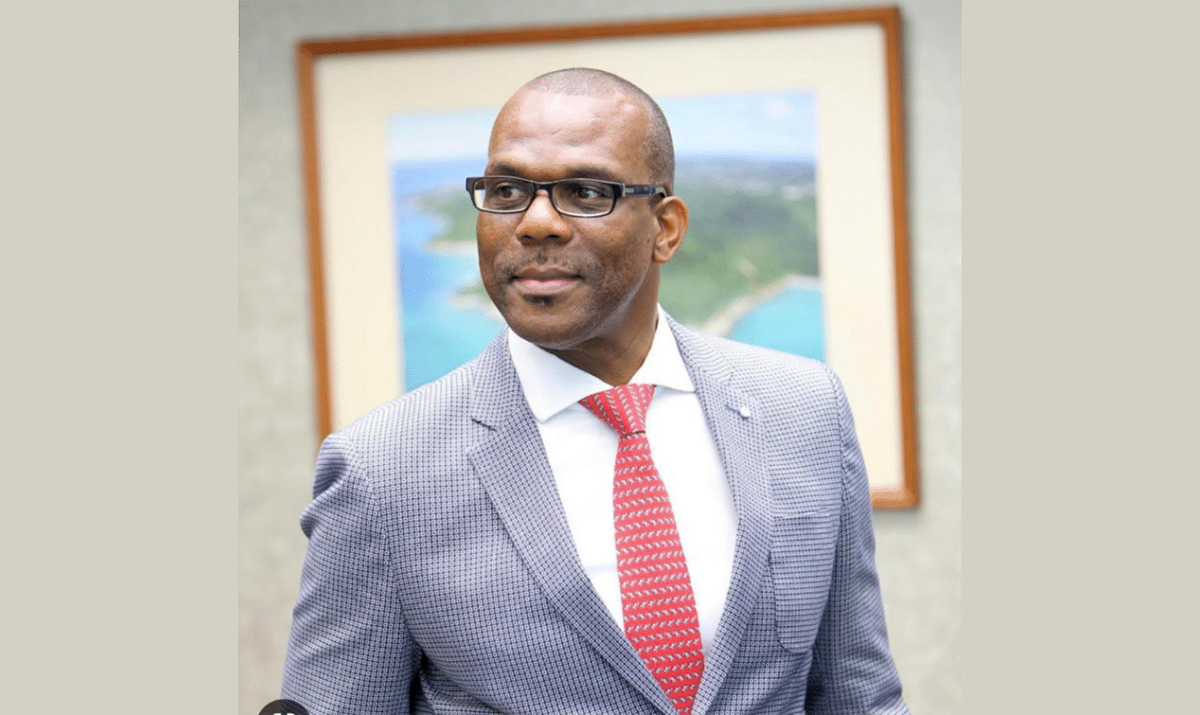
25 Jun Interview with Thomas Anthony, CEO, Investment Migration Agency IMA, Grenada
The Grenada Citizenship by Investment Unit recently celebrated its ten-year milestone by rebranding itself as the Investment Migration Agency Grenada. How do you envision this rebranding will impact the global perception of Grenada’s investment migration program?
We believe that sustainability comes with adding elements to the program apart from directly through the citizenship by investment program hence it is now the investment migration program. It can be all-encompassing and in the not-too-distant future, we intend on creating a residency component that will run parallel to this citizenship-by-investment program. Essentially, individuals who desire to live in Grenada for some time would be able to do so by paying an annual fee. After a certain number of years – and currently, we’re thinking three years – they’ll be able to apply for citizenship rather than the direct route having made the investment to obtain citizenship like now. We also want to add other elements to the citizenship by investment program, such as the requirement for applicants to visit the country after having made their investment but before citizenship is granted and they will deposit their biometrics in the country.
Looking to the future, we want to make these programs more sustainable and to give comfort to our visa-free partners and our development partners by adding elements that will mitigate against risk. From a reputation perspective, historically, citizenship by investment programs have a negative connotation as passport-for-sale programs. Notwithstanding that’s not what we do, that reputation remains. We believe that shedding that reputation presenting ourselves in a different package is important.
What measures does your agency have to ensure thorough due diligence and compliance with international standards?
We have a multi-layered approach to due diligence which involves multiple agencies and entities. We have various stakeholders in the source market interacting with clients directly and bringing us applications. We call them an international marketing agent. Those entities are granted a license by the agency. Before we grant a license, we conduct thorough due diligence on the directors, shareholders, senior executives and the entity itself. We also have another community of agents we call the local agents who reside in the country,and for the most part are attorneys at law.
The international marketing agents conduct KYC on these clients and determine whether or not they will onboard them as clients. Once they have made that decision, they pass these clients on to the local agent. The local agent also conducts due diligence on these applicants. Once that decision is made, there’s another layer. The agent has to provide the local bank with a list of documents for the bank to conduct KYC on this potential client. Once the bank determines that it will accept funds from that individual, an application is submitted to the agency. There are all those layers before it gets to the agents.
Once it gets to us, we then have two teams that would look at this application. The first team looks at the application to determine whether all of the documents that are required are indeed attached and that they are in date, in good standing, properly notarized and certified. Once that decision is made, the application is then handed to a second team within the agency called our Due Diligence Department. The Due Diligence Department interacts with two agencies. One is a local intelligence agency called the Financial Intelligence Unit. which submits applications to the Joint Regional Communication Center. This is a sub-agency of CARICOM IMPACS. CARICOM IMPACS, in short, has national security responsibility for all of the Caribbean islands; they will conduct their due diligence, using their various assets and sources: law enforcement agencies, intelligence agencies and Interpol Europe, for example.
The second agency that the due diligence department interacts with is our international due diligence providers. Some are located in the US, Canada or the UK. They conduct due diligence again on everyone who is 17 years and older in every country they have lived in for more than a year over the last 10 years. They do this research using a combination of desktop research as well as human intelligence on the ground in the country where these individuals have lived. They interact with the various authorities in those countries to authenticate documents, to check whether or not an individual has a criminal record, or whether or not they have a civil litigation record. It’s very comprehensive and no decision is made on an applicant until and unless those two entities, the FRU and the international Due Diligence provider come back to us with a report.
Once those two reports get to us, the application is then submitted to the CEO’s desk for further analysis. The applications are put in one of three different brackets: low risk, medium risk, or high risk. All applicants go through an interview element regardless of the risk brackets, but the nature of the interview is determined by the bracket in which they find themselves. For a low-risk bracket the interview will be more about verifying the identity and the information that was provided. For medium and high risk, the interview will be more involved and it will be designed to try to close the information gap between what was declared by the applicant and what was found in our research. Once a decision is made, the application then goes to the line minister who then takes it to Cabinet. Cabinet has a final say.
What partnerships or collaborations support these efforts?
From a governance perspective, we have what is called the Six Principles Agreement with the US Treasury Department, where we have agreed on the implementation of six areas. This is across the Caribbean programs, not just Grenada. We agree on information sharing, the programs being audited either annually or every two years, sharing the denied applications between us, passport retrievals if we have to cancel passports and deprive individuals of citizenship.
Recently, the five prime ministers of the CBI countries in the region signed a memorandum of agreement, agreeing on some minimum standards across the region to take effect from July 1st. It includes a minimum price of $200,000, the same minimum due diligence standards, greater sharing of information, minimum standards for the marketing agents to operate, infrastructure through which there will be police to ensure that they are operating under these minimum standards. Most significant is we have agreed that there should be a regulator put in place to regulate all of the programs to ensure that all of us are compliant with all of these standards that we have agreed to.
What is the current minimum investment required for Grenada?
Currently, for a single applicant, it’s $150,000 into the National Transformation Fund (NTF). That essentially is a contribution to the government and there’s no return on that. For a family of up to four, it starts at $200,000 plus fees. As the family number grows, the investment amount increases. A family of five would pay more than a family of four. For an approved project, which is largely real estate at the moment, the minimum investment is $220,000 to the developer and an additional $50,000 to the government. Excluding the fees, it will be $270,000 for a family of up to four and again depending on the size of the family and the family mix, the amount increases.
There are some fees in the application process. You have your application fee; you have your processing fee. More particularly, you have a due diligence fee that every member of the family has to pay. The main applicant and spouse are about $5,000 and those individuals who are dependents – children, parents, or grandparents – would pay about $2,000 to $4,000 per individual, to conduct the due diligence. It’s a pass-through fee. We don’t make any money on the due diligence fee, but it’s enough to ensure that robust due diligence is conducted on everyone who’s 17 years and older. They also pay an interview fee which is part of the due diligence process.
What are some of the most successful projects funded by the NTF and how have they contributed to Grenada’s economic growth?
After the 2008 global meltdown, conventional financing available to hoteliers dried up in the region completely. Most of the hotel plans that have been constructed in the five countries that have CBI programs are through CBI and it’s not different for us. We have had the first Six Senses property in the region opened in Grenada, fully funded by the CBI. Just before that, we had Silversands Beach House, which is a boutique hotel of 28 rooms that opened up in March. That, too, was fully funded by the CBI. There are other properties, such as The Point at Petite Calivigny, which is a fully funded CBI property and under construction, we have the Intercontinental, which will be the first one in Grenada, scheduled to open in 2027.
We also have a significant project in the north of the island. This is an important project for that part of the country which otherwise has limited economic activity. That hotel, called the Grenada National Resort Project, is being built by a Chinese developer, it is also a CBI project.
Overall the NTF is contributing in a significant way in terms of the economy generally, in terms of increasing Grenada’s hotel room count, so that we can grow the tourism product, but it also contributes in a significant way to government revenue directly. Last year, for example, the program contributed just under $200 million to the government. You can see how significant that is to an economy of $1.4 billion GDP.
Beyond the absolute numbers you have the jobs that are created through the construction phase of the hotel, the jobs from the operational phase of the hotel and then you have the spin-off such as construction sites, vendors that pop up at that site to serve the individuals who work on the site, taxi drivers who benefit from individuals who come here through the program and the local agents employed by the program who in turn employ local people to process the applications and do some of the other after-service activities. These may include assisting the citizens with their passports, maybe opening a bank account, getting ID or some of the other things that they do on the island.#
Which are the largest nationalities applying and obtaining citizenship?
Before the Russian war, the majority of the applicants were Chinese and the second nationality was Nigerians. After February 2022, after the war started, you had a situation where the CBI and Residency By Investment (RBI) programs available to Russians globally shrank from 25 or more to five, Grenada being one of them. As a result, we had an influx of applications from Russians between February 2022 and March 2023. We ceased accepting Russian applications on March 31st 2023 but we continue to process the applications that were submitted. It was a significant number, it overwhelmed our system, so it’s taking us some time to work through that backlog. But as we do that in 2024, the major nationality is now back to Nigerians.
There’s an uptake in the number of individuals applying out of the US. There are several reasons for that: the political landscape and the sense of security being compromised in many places. We expect that that is going to continue to grow as one of the major international marketing agents has more than tripled its footprint in the US because they see this uptake and it’s leading to a flood of applications.
What role do investors play in supporting initiatives in Grenada?
We have embarked on a program called the diaspora desk, which is an effort to build relationships with our citizens who live in various parts of the world and invite them to participate in the economy, not just from a capital flow perspective, but also their expertise. Many of these persons are professionals, ultra-high-net-worth individuals with skills in various areas of the economy: surgeons, software developers, serial entrepreneurs. We want to invite them to come and impart, to help us grow the skill set of Grenadians. It’s not just a matter of coming with your money but also coming and imparting your expertise to Grenadians. We think that that will add to the sustainability of the economy as individuals locally grow. By doing so the economy itself will grow because we broaden the tax base, we broaden the sectors and industries that are on offer locally as well as those sectors and industries that will benefit from the flow of capital, but also the skills of these new citizens of Grenada.
What advantages does your program have and how do you plan to maintain your competitive edge in the investment migration industry in the coming years?
Grenada has a reputation for being a robust program. We insist that the legally mandated price point is the legally mandated price point and every investor must pay that price. I think we have a reputation for integrity in the industry.
We also have a pretty efficient process. Currently, the process is overwhelmed by the flood of applications from Russia. We are at about eight months turnaround time, but we’re working to get to a four-to-six-month turnaround time so that people know that when they apply, within six months, they’ll have a response where they say yay or nay. Efficiency is one of the things that we’re known for.
There’s also the opportunity for individuals through what’s called the E2 Treaty to gain business access to the US market. After residing on the island for 3 years, they can apply for the E2 Treaty which allows an individual through 50% shareholding of a US-facing entity to gain a visa for themselves and their family to reside in the USA but it shelters them from the US tax system as it relates to their global income. The US-facing entity will pay the relevant taxes, but their global income will not attract US tax because of the nature of the E2 visa, unlike the EB-5 where you’re granted a permanent resident status and attract US tax to your global income. No other CBI country in the Caribbean has that E2 arrangement with the US. We don’t like to advertise or promote on that basis, but it is an advantage we have when someone properly qualifies.
Would you like to take this opportunity to discuss any other issues that we haven’t covered or any final message for the readers of USA Today?
US individuals may not understand these programs because Americans have one of the most powerful passports in the world. But there are places in the world where individuals, just because of the accident in the place of their birth, cannot just get up and travel to a country. There are some places where they may be able to go to 40 countries; Americans can travel to 170 countries without having to think about a visa. In Grenada, it’s about 145 countries that we can travel to without having to go through the visa process. The US is not one of them, nor is Canada but the Schengen area is one of them and the UK.
The demand for these programs is not from individuals who are criminals and crooks and looking to run from law enforcement, as many people think, but there are families who are concerned about their children. One category is, for example, individuals looking for education opportunities and business opportunities in the West for their children. They do this to allow their children to have access in that way. For others, for example, in some countries, families are told that their girls cannot go to school and get an education.
In another category, it is a security blanket, in the sense that you live in a country where there’s civil unrest so some people do the CBI program as a plan B so if something happens, they can get their family out.
There’s no limitation in Grenada on the number of nationalities one could have. These are essentially second citizenship programs. You would have to have citizenship to apply in the first instance. You don’t have to renounce your citizenship. You can have as many as your pocket allows you to have, or your family lineage.
Sorry, the comment form is closed at this time.