

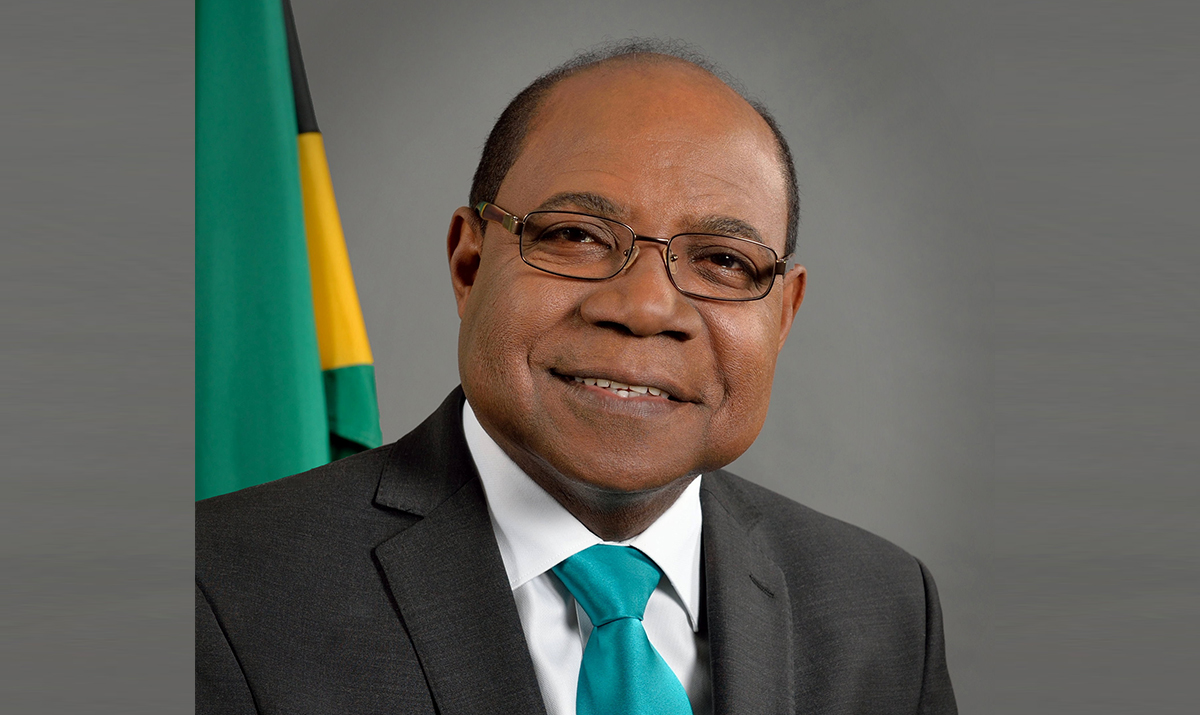
27 Feb Interview with Edmund Bartlett, Minister of Tourism, Jamaica
Jamaica’s tourism sector continues to show resilience, exceeding expectations throughout its rebound from the pandemic. Your sector earned a whopping $3.7 billion last year, shattering all previous records. As we look ahead, what would you say are the key factors that have contributed to this success, and how is the Ministry of Tourism working to sustain this momentum while addressing the ongoing challenges facing the industry?
Firstly, the collaboration between stakeholders and the approaches by the government to the activities, navigating and managing the pandemic, along with international partners all succeeded in creating a recovery we are proud of. We were the first country in the English-speaking Caribbean to open its borders – in June 2020.
That was occasioned by a very bullish approach to building protocols and managing that process. We had to change laws, we had to adjust some elements of well-revered and highly precious human rights to create the opportunity for all of us to be able to understand the global phenomenon, but more so to respond to global protocols. We, of course, followed it all to facilitate the ongoing process; in the effort to make sure that we had compliance, we had to create special zones too.
One of them was the resilience corridor, which we developed along the north coast, which is the highway that ran from Negril all the way to Port Antonio. Fortunately for us, our geography enabled us to build out 80% of the tourism assets along that strip. We brought in the COVID-19 management equipment that was required, we created the necessary infrastructure, established social distancing measures and installed sanitizers and used technology to a great extent to enable touchless applications as much as possible.
In addition, a stimulus package was developed. We enabled people to receive a subsidy and enabled our tourism plans to remain pretty much intact, no mothballing. We worked with the banks and financial institutions to provide support to people on low incomes or with no incomes, people who had loans, so they either had forgiveness or a moratorium on payments of interest. The combination of all those things enabled us to follow all the protocols that were required of us and enabled us to navigate through.
The US market remained open and was never closed, while other countries were shut. They provided the lifeline for the Caribbean tourism, and Jamaica is grateful for that. We were able to recover within a year and a half of a projected two-year recovery period. As early as June 2022, Jamaica began to see, monthly, higher figures than in 2019.
We have just had our best winter on record, with about 1.2 million arrivals and earnings just above $1 billion, which is a 96% increase. We are now on a path to realize better than 2019 levels for the rest of the year. We could end up with $4 billion of earnings, which would be a huge budget for Jamaica. The jobs have essentially come back.
While we have had issues with supply chains – as many countries have – our local suppliers have stepped up to the plate quite a bit, and a lot more local goods are in our tourism space than ever before. That is good for the country because it retains the dollar in our space, and it gives more authenticity to the destination because the visitor now comes and they are experiencing Jamaican things, such as food, transportation, and entertainment. The future now looks better because more investment will come.
Prior to the pandemic, you launched the Tourism Resilience and Crisis Management Center to help nations vulnerable to natural disasters have an action plan to rebuild their tourism sectors. Jamaica’s sector currently employs approximately 170,000 people and contributes roughly 9.5% to GDP. In relation to the Ministry of Tourism’s five-year plan of creating sustainable employment opportunities, what specific strategies are being employed to ensure that this goal is met by 2024?
This year features a very ambitious objective, given the two and a half to three years of pause that we experienced. However, looking at the three critical elements of sustainability, economic, environmental, and social, we are, as a country, pushing to deal with human capital developments through more training.
We are transforming our education system to enable more of the cognitive systems to have a place, not just the absorption of knowledge, but also the conversion of knowledge into practical and meaningful. One of the things that we are doing is ensuring that new investments in the tourism sector embrace the environment around it, not just following the basic steps of mitigation and adaptation, as part of the climate change discussion, but to take an interest in the social development of the communities, with housing, water, sewage, electricity, basic needs, education, and training.
The economic side must now empower people in those areas to produce special, new, and exciting creative goods that are unique. We must look at special credit arrangements and at technology to enhance their production and productivity, and then identify markets where they can sell their goods. The jobs market is one that is dynamic at just 6% unemployment, which is the lowest in our history, and by itself it creates issues now in terms of growth and expansion. While we are going to have to revamp the education system, training, and certification, we are going also to have to look at how to bring new skills into our space to augment what we have and to enable us to keep production moving.
With the rise of remote working, Jamaica launched the Digital Nomad Visa Program in early 2022 to allow remote workers to live and work here for up to 12 months. How has this visa program impacted Jamaica’s tourism industry so far, and what steps has the government taken to ensure that it benefits both remote workers as well as local communities?
The initiative is still in its infancy, meaning it is difficult to assess its impact to date. The challenge with remote working, of course, is it requires a certain level of digital infrastructure, which is not yet fully developed. It also requires a level of social infrastructure too: for health, security, roads and housing. These nomads cannot necessarily be in hotels because due to the high cost, they need villas or other types of longer-term accommodation.
Then there are the other issues in relation to work permits, double taxation treaties, bearing in mind that these workers are now part of our population and are not tourists, in the sense of being here for a few days, a few weeks and gone. They are part of your population, and you have to cater to them and their needs, as a regular member of your community.
These are some of the issues that must be handled to enable this to happen. In some countries, it can happen easily, especially those with very well-developed infrastructure and digital infrastructure, and where also there are huge assets that people can utilize and move.
Jamaica has long been known for its beautiful beaches, but the country also has a rich cultural heritage and many attractions beyond its coastline. What is the government doing to promote alternative forms of tourism, such as ecotourism, heritage tourism, and adventure tourism, and how can these sectors help diversify Jamaica’s tourism industry?
I am not quite sure what you mean by alternative forms of tourism, because my definition of tourism is this confluence of different activities, actions, experiences, and they flow from every aspect of life. People travel to fulfill their passions, and there are these passions, you name it. Whatever products you build can respond to a passion point, and that is the basis for visitors to come; that is tourism.
What we are trying to do here is to look at what you call psychographic profiles, so you will see what it is that inspires people to travel, what is it they want when they go to their destination, and then to build products around it. The discussion of diversification then is around what you call psychographic profiles. Tourism is not an entity unto itself. Tourism is not like agriculture, where you can measure how many tons of wheat you produce. Tourism is about whole experiences consumed by visitors. Our job is to increase the number and range quality of experiences that are available to those visitors. That is why people travel.
We work closely with the Ministry of Culture to look at sites because these are areas of interest. For entertainment, Jamaica is well known for music; some of the famous musicians include Bob Marley. In sports, we are very well endowed with some of the finest athletes in the world. We have the fastest man alive, Usain Bolt, and the fastest woman alive, Shelly-Ann Fraser-Pryc. Jamaica is well positioned in terms of these key human assets to drive visitors.
In addition, we are rich in diversity, there is no question about that. In flora and fauna, we have more than 3,000 species of plants and boast butterflies unique to this area. We also have geophysical features in underground caverns with stalactites and stalagmites. We have groundwater systems and river experiences that are huge. Jamaica has more attractions, more things for people to do than all the English-speaking Caribbean combined.
Would is your final message to the readers of USA Today?
We are driven by the recognition of resilience and sustainability as the twin pillars. We have focused on investment in building the capacity to recover from shocks. We know shocks are a feature of the world today: hurricanes, wars, economic disruptions, terrorism which we have experienced, health issues such as the pandemic.
To enable an environment that is sustainable one must be resilient. Jamaica is driven by that. We established – and it has been replicated around the world – our Global Tourism Resilience and Crisis Management Center, which really sits at the University of the West Indies and provide a frame for the academic rigor required to find new ideas and innovation to develop growth and sustainability.
Sorry, the comment form is closed at this time.