

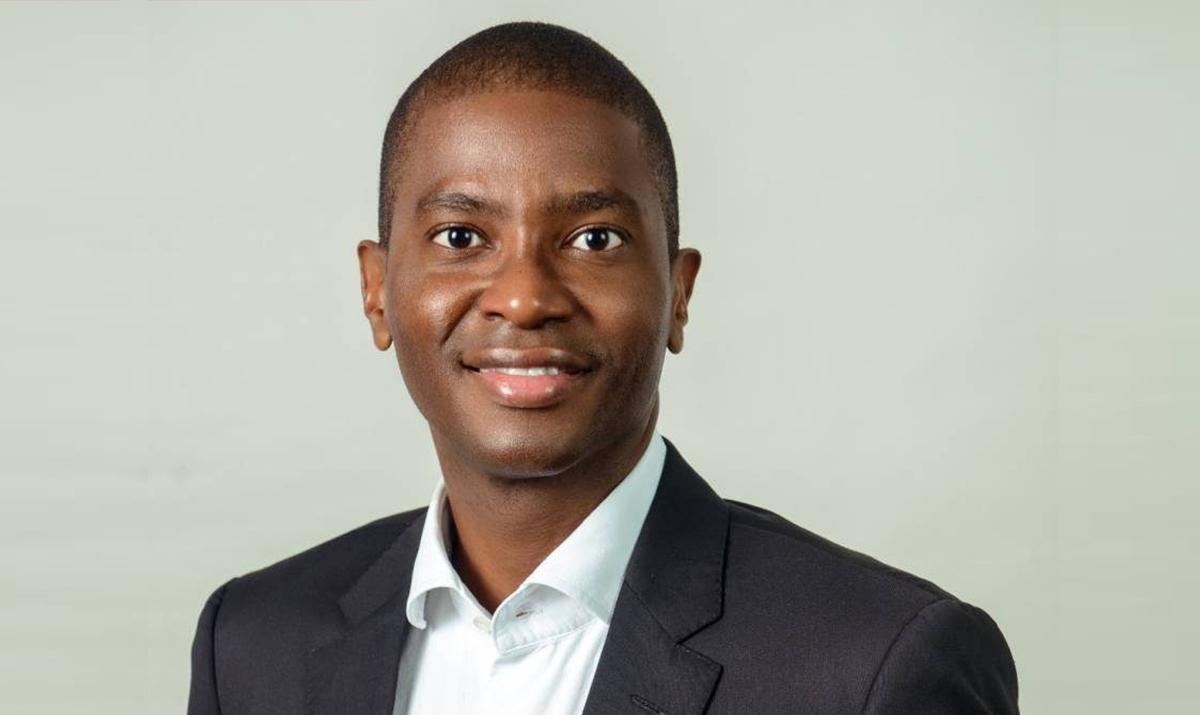
11 Jul Interview with Hon. Dickon Mitchell, Prime Minister, Grenada
Interview with Hon. Dickon Mitchell, Prime Minister, Minister for Infrastructure and Physical Development, Public Utilities, Civil Aviation and Transportation, Minister for National Security, Home Affairs, Public Administration, Information and Disaster Management
The blue economy offers avenues for sustainable fisheries, renewable energy, resources, biotechnology, coastal tourism and ecosystems management approaches. What challenges are you facing in this blue economy and the green economy on a small island like yours?
The single biggest challenge facing the blue economy is climate change. Rising sea temperatures in particular have had a devastating impact. From coral bleaching to temperatures in which fish simply can’t survive because it’s too hot and the impact it has on oxygen and water, as well as the devastation brought by a storm and sea surges to the coastal region and the threat of sargassum. Sargassum has been a major challenge for us. Large chunks of it come off the South American coast often and end up on our coast in piles and heaps. It impacts the tourism industry, on fish stocks and as a result, fishermen suffer as well as the tourism industry. We have to spend a lot of resources cleaning up the sargassum and, if all corals are being bleached, just from a diving perspective, you’re not diving to see anything attractive. It significantly impacts fish production because we know we need our corals to help with that. That’s a major challenge and it’s one part of climate change that we have not focused significantly on enough in terms of the marine environment and the pollution that comes. Then you add to that the land-based materials that end up in the sea and waterways, plastics in particular and you understand how devastating it is. Studies show that all of us have microplastics in us because of the prevalence of plastic in almost everything we do. So, oceans, rivers, streams and estuaries are suffering from significant plastic pollution.
But we have to find solutions and we have embarked upon creating marine protected areas to preserve biodiversity to encourage the rebuilding and growth of fish stock. We’ve sought to ensure that we don’t overfish. Many of our species have closed seasons – for example, lobsters – when we do not allow fishermen to fish so that we can ensure that we have sustainable fish for the marine life stocks.
A couple of years ago, we implemented an absolute ban on the use of single plastics and plastic straws. I will admit that, economically, it’s more challenging to ban the single-use plastic bottles we use particularly for portable water. But it’s something that we have to give a serious talk to because recycling is a challenge. Obviously, we have to mitigate the impact on the businesses that depend on them. Recently we had the opening of Six Senses Hotel on the east coast and they’ve eliminated the use of plastics. They don’t use plastic bottles at all; they use glass bottles which they recycle and clean. That’s just a small but important step, even from the private sector, recognizing that sustainability is absolutely key.
How would you describe Grenada’s relationship with the US? What are your perspectives and how are you working towards strengthening this relationship?
Our relationship is excellent. Grenada has a unique history with the United States. In 1983, an American-led military intervention restored the Democratic governance on the island. We’re the only island in the Caribbean where that has ever happened. To some extent that has significantly strengthened and been the basis for our relationship for the last 40 years.
We’ve got a large diaspora in the United States, especially on the Eastern seaboard. We’ve got an American embassy in Grenada. We’ve got significant American investment interests on the island, for example St. George’s University, which is a premier offshore medical school – I would say the premier offshore medical school in the Caribbean – and it has produced over the last 40 years several tons of medical doctors and medical professionals. Most of them are based in the United States.
Tourism-wise, we depend significantly on American visitors and American tourists. They come not just for the geographical closeness, but it is a clear indication that they find that Grenada is a very peaceful, loving, warm and majestic island. Naturally, if you want a place like this you come to Grenada. For many Americans who live a high-stress, bustling, hustling life, a vacation in Grenada is what they need to recover and go back to that lifestyle.
We work very closely in security matters, from matters dealing with illicit drug trafficking, or the firearm industry, which is a major challenge to small islands because the firearms industry is oftentimes linked to the Americas because of our geographic location between North America and wherever drugs come from in Central and South America.
What would you say are the business opportunities available at the moment in Grenada for the US especially?
We believe the health industry is a major industry for investment. The country is embarking upon building a medical city; the cornerstone of this would be a new modern smart hospital. We intend to create an entire ecosystem that would support private investment in select areas to support that medical city, not just the hospital, but all of the support services that would arise from that. Ensuring that the new hospital is also a teaching hospital to allow students to be able to do rotations is also going to be crucial. We also want to focus on medical tourism, health and wellness in general. Not just curative medicine, but preventative medicine, holistic medicine and natural medicine. Grenada has a perfect opportunity for that. It’s one of the few islands where you can get pristine white beaches, then 20 minutes later, you have lovely cool waterfalls and fantastic trails in the mountains that are scenic and peaceful. There are significant opportunities for investment in the health tourism industry.
We often underestimate the impact of transportation and the dirty fuel that is used in transportation. As it stands now, we have very few electric or hybrid vehicles on the island. We have taken a policy decision to actively encourage and support the transition to electric and hybrid vehicles. For example, we’ve introduced a 0 rating of importation fees, taxes and customs duties on all-electric and hybrid vehicles, because we recognize they’re still a bit pricey. To encourage and reduce their cost, we are not collecting any taxes at all on the import of both of them compared to carbon-burning fuel vehicles. That includes all of the supporting infrastructure like the charging stations and so on. It’s an area we want to aggressively pursue. We also want to encourage more public transportation and fewer private vehicles so you would find less congestion on the road and, by extension, less pollution. It would again preserve the sustainability and resilience of the island because the more vehicles you have, the more you have to spend money maintaining the physical infrastructure.
Certainly, the renewable energy space is one area where there are opportunities for significant investment as well. In the next couple of months, we intend to put out expressions of interest inviting persons to tender for renewable energy, in particular, large solar sites so that we could begin to increase the renewable penetration. The blue economy as well is an obvious area for investment.
I can’t let this go without saying food production. That is another area where there are significant opportunities for modernization such as diversification and the introduction of modern agricultural techniques for food production.
The Citizenship by Investment program is appealing to Americans. What impact and potential do you expect to have from this kind of program?
The impact has been quite successful. It has led to a significant investment in our tourism plan. Before the introduction of the Citizenship by Investment program or Investment Migration, we were struggling to get any sort of direct foreign capital investment in our tourism industry. Tourism is extremely capital intensive: the building and maintenance of hotels and then you have to be able to get the traffic in terms of the airlines to come and bring tourists. The Investment Migration system has significantly improved direct capital inflows in the tourism sector. Currently, for example, the Six Senses Hotel opened in a rural part of Grenada that has not had any major tourism investment was built directly through the Investment Migration program. Right next to the Six Senses, the Intercontinental is currently in construction. Intercontinental Hotel is scheduled to open in the next 24 months.
We have a National Transformation Fund (NTF) that is funded by the Investment Migration program. What that Fund has been able to do is help and significantly address our national fiscal challenge. In 2013, we found ourselves in a position where our debt-to-GDP ratio was significantly unbalanced and we were not in a position to sustainably pay our debt back. We had to self-impose a structural adjustment program with support from the International Monetary Fund. With proceeds from the Investment Migration program, we’ve been able to significantly pay our debt to the point where our creditors are now offering us further credits because they’ve been impressed with us sticking to and making our commitments. That is largely a result of the inflows from the Investment Migration program. It has allowed us to have a buffer to address the shocks that come one way or the other. Small islands tend to be at the bottom of the food chain but we have been able to build resilience.
We intend to continue with the program. We intend to continue encouraging people to be part of the program because the world is truly a global village. There are hundreds and thousands of Grenadians in other parts of the world. They feel welcome and they get the opportunity to make a living by investing in New York, London, etc. Equally, we feel fortunate to be able to give back something to the rest of the world, to persons who, for whatever reasons, may need to leave where they are, whether it’s political instability, whether it’s persecution based on ethnicity or race or religion and to be able to come to a peaceful, tolerant and beautiful small island.
Caricom celebrated its 50th anniversary last year. This year is Grenada’s 50th anniversary of independence. Can you reflect on Grenada’s achievements since gaining independence?
We’ve come a long way. We have developed significantly, economically and socially since independence. In education, for example, in the past, a vast majority of Grenadians had no access to education and large portions of our population were illiterate. By 1983, Grenada accomplished literacy rates in the nineties. Infant mortality rates have dropped significantly.
When Grenada became an independent country, it had no international airport, as we had a small runway in the north of the island. By 1983/1984, Grenada was commissioning an international airport. That opened Grenada to the world. It facilitated the growth of St. George’s University, it facilitated the growth of our tourism industry, it facilitated the expansion of our economic trade, the movement of people and by extension, the education of our people.
Every child in Grenada has access to universal secondary education that is paid for by the State. We’ve also eliminated all tuition fees at our main tertiary-level Institution. Between that period of what we call junior college up to that level of education in Grenada is provided absolutely free as no tuition fees and registration fees, etc. and all students can access education. At the sole university that we have on the island, St George’s University, all Grenadian students who meet the matriculation requirements are provided with a 90% scholarship so that they can attend university.
But like every other island, we certainly still have challenges. Sustainable economic development, responsible economic development is still a significant issue that we will forever have to grapple with. We are looking forward to the next 50 years by ensuring that we can invest in our people, by ensuring that we can modernize our education system so that all systems can continue to compete and succeed with the rest of the world.
Those are some of the issues. The energy transition is also important because we certainly feel that it will make our energy cheaper, more sustainable and more secure if we rely on natural elements, that we have the sun and wind and not on fossil fuels, which have a finite life. We want to focus also on skills training to tackle all the things that we need to continue building our societies and ensure that skills training is given the right value, incentives, reward system and encouragement. While we’ve had a pretty good academic education system, all over the world, there are significant highly skilled people. Traditionally, people always favor academic skills, lawyers, doctors, etc., but it’s just as important, probably more important. Focusing on that is one of the key things that we’re also going to be focusing on.
Sorry, the comment form is closed at this time.