
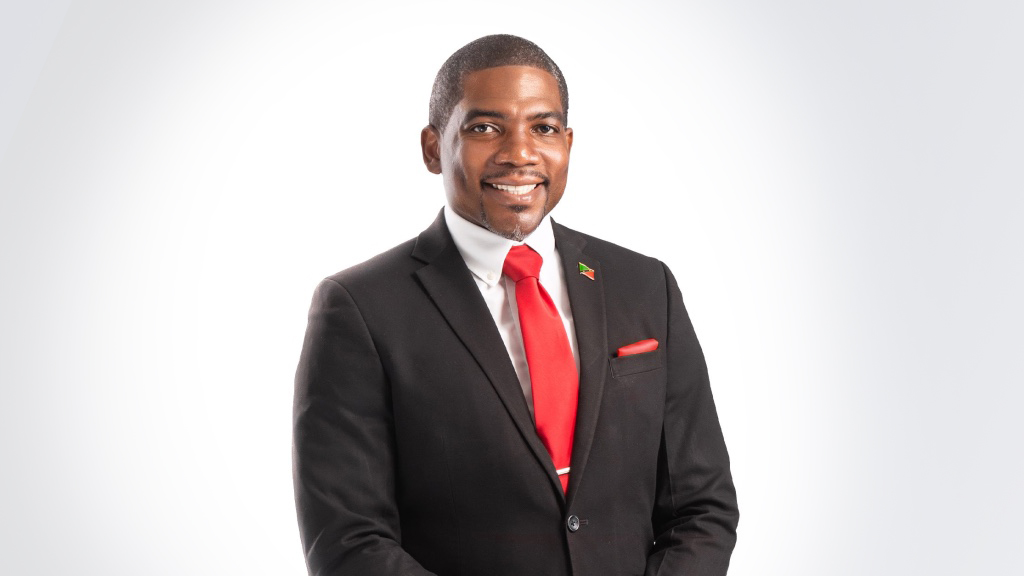
29 Feb Interview with Terrance Drew, Prime Minister, of St. Kitts and Nevis
Can you give us an overview of the key milestones you have reached since you took office in August 2022 and the others you expect to reach during your tenure as Prime Minister?
Ww have accomplished several critical things that we had not accomplished before. For example, we have the highest number of women ever, both in our cabinet and in our parliament. That is our thrust to create gender equity, and we have achieved it significantly, reaching the percentage that has been set out as a reasonable percentage. We intend to surpass that by giving more opportunities. That is a major milestone.
There are other things that we were able to achieve through social development. For example, we made education free up to the college level, where students go from preschool all the way up to college, with a significant amount of support.
Another milestone was the passing of a resolution to make geothermal resources an asset of the federation, which had never been done before. Politically, it has always been challenging and difficult, but we were able to pass a resolution. Because of that, we are now on the cusp of pushing forward to developing geothermal as a major part of our economy and transforming us into what we term a sustainable island state. That is very exciting.
But the premise of all of that is the good governance agenda. We have passed good governance laws in Parliament and have enacted them. That is a major accomplishment that has been spoken about for many years, but we achieved it. Those good governance laws deal with integrity in public life, transparency, freedom of information, and so forth.
Regarding the economy, we are recuperating, and we expect to recuperate 2019 levels in 2024. The prospects look really good and we have also been able to diversify. When I gave the budget address recently, all the major sectors of the economy grew. That has been a major achievement, especially because we are dealing with the post-COVID-19 situation and crises around the world.
We were also able to put together our vision as a sustainable island state which we have taken to the world. For the first time in our history, we presented the Voluntary National Review to the United Nations and our sustainable island state vision. We were able to take it to multiple for a, including COP28, where I shared the stage with US Vice President, Kamala Harris. If you listen to her speech, she referenced us because we are working on pursuing how small states can develop models to deal with the scourge and effects of climate change. Internationally, regionally, and even here locally, we have been able to do a significant number of things.
The last thing is the repositioning of the economy, letting it respond to the needs of our people. We were able to increase the minimum wage in the pension plan for those workers – who we call the GAE workers – who normally would work for less in the government system to give them a pension plan. We were able to increase salaries for civil servants, as well as increase social security benefits. We have introduced a policy where we will launch a financial education program for all children in St. Kitts and Nevis, being supported by the Eastern Caribbean Central Bank. We are opening accounts for our children and giving them the opportunity to buy shares in the local companies or the public companies.
For example, we have the cable company that the government majority owns. We will divest the shares and allow the children and their parents to buy them, so they will become owners of companies. We want that to start that young. The dividend will add to their savings and give them opportunities to invest further so that they can create a financial profile long before they are 18. That gives them an opportunity for economic independence and to escape any scourge of poverty. That has also been a significant achievement.
We have invested heavily in water. Because of climate change, we have droughts, it has become a problem and the increase in sea levels is intruding into our wells. We have been able to devise a plan, which includes desalination, partnering with hotels, and drilling for water to help resolve the water matter.
In that short time, we have achieved a significant amount of groundbreaking work, not the routine work of running a government, but steering the country in a more prosperous direction, diversifying the economy so that it can be more resilient to shocks.
During your participation at COP28, you highlighted an investment of $350 million over the next five years in geothermal development to ensure that St. Kitts and Nevis goes fully green with the capacity to provide clean energy to its neighboring countries. What does this investment include and where does it currently stand?
Presently, the geothermal resources are mainly located on the island of Nevis. From all the studies, we have an opportunity to have about 1GW, which is 1,000MW. Between St. Kitts and Nevis, the worst-case scenario is, we only need 50MW, which leaves a surplus of about 950MW. We want to use that extra energy to power other countries in the region. We can go as far as Puerto Rico, the French Antilles, the Dutch Antilles, and other OECS countries. We also know there are some energy resources in St. Kitts, but we have not explored that yet.
We have invested $70 million of our own money to date but need another $20 million, hence we are partnering to get that other because we want to start drilling up to five wells in 2025. They will take us quickly to 10-30MW. After that, we can develop up to 1GW just from Nevis alone. There lies a great deal of opportunity for investments.
Apart from powering our neighbors, this energy can power green shipping, which means we can provide energy if we were to convert it into molecules such as hydrogen, or green ammonia, and the new cruise ships will be able to use these molecules. We can also give them onshore energy so that when they come into port, they can shut down and use our green energy. That will help to cut down their carbon footprint in the Caribbean, which also will provide some revenue for us, and it will be cheaper than fossil fuel. It is a win-win. This, of course, gives investors an opportunity. It is going to be a reliable source of revenue from geothermal development.
We are at the cusp of starting to drill and then we intend to build it out so as to provide cheap energy for our people, industry, homes and desalination, which will create a great deal of water. With energy and water, you have food. If you have energy and water, you can invite industries in because the guarantee will be you will have green, cheap energy.
Once the first wells are going, we intend to build out all the others, and we will create a scenario where people can invest, to help us to build. Unlike solar and wind, this energy is constant, it does not depend on the weather. That is why it gives us such a strong opportunity to transform St. Kitts and Nevis and the Caribbean. We are going to push on to make this a reality. This is our equivalent of oil; it gives us the opportunity to develop further as a country.
In November 2023 you participated alongside fellow CARICOM leaders in the CARICOM-Saudi Arabia Summit held in Riyadh. What were the main investment opportunities discussed during this event? What other countries are you currently in talks with?
The meetings with the various ministers and various agencies, and even with the leader of Saudi Arabia, were very fruitful and productive.
We had the opportunity to discuss several critical investment opportunities. For example, transforming our power stations with new types of generators that can work with LPG and LNG. The reason why that is important is that it helps us in our transition to green energy, and they also provide a new generation of generators that can use renewable energy as well. They are seeking significant investment in that.
We also discussed geothermal and they would like to invest with us. We also discussed agriculture, desalination, and other issues, but the most important was how we going to transform St. Kitts and Nevis when it comes to our energy situation.
In early 2023, a US government delegation attended a meeting in St. Kitts & Nevis to discuss the Citizenship by Investment (CBI) programs in the Caribbean. What were the main topics discussed, and what is the current state of CBI in St. Kitts and Nevis?
That was a very important meeting and we welcome the US being a part of the discussion. We are responsible countries and want to make sure we are in discussion, partnering, and making sure we are doing what is right to safeguard all involved.
We have made significant changes in terms of tightening our CBI, especially the security apparatus. We have added an extra layer to protect the program so that nobody can abuse it. The program has been good in terms of helping our investment and development, but we must ensure no one abuses it. We have taken even more steps to engender that confidence in our partners that this program is not being abused and are constantly monitoring it.
We made some significant changes in terms of security, in terms of investment levels, and so forth. We are diversifying as our economy so CBI will become just part of our economic outlay as we seek to develop.
Can you give us some details regarding the growth in the tourism sector, and what sectors within tourism do you see growth for over the next year?
The tourism sector has rebounded and we are scheduled to rebound to 2019 levels in 2024. Last year we welcomed about 750,000 tourists. This year, we will surpass that.
Aviation is an area where we can improve significantly. Tourists who arrive by air tend to stay longer and spend more. From the US, we added JetBlue, while Air Canada expanded and American Airlines. We also needed to increase our provision of regional air transport. We have two regional airlines offering services and are looking at a third to serve St. Kitts.
We are also looking at different aspects of tourism, such as cultural tourism, where we sell St. Kitts and Nevis as an authentic country you can truly experience, or ecotourism. Our campaign was titled “Venture Deeper”, and it resonated with people as started to become aware of us.
We are developing our creative economy because that is going to be linked to the culture apart from how we live as a people, but our culture as a product that you can come and enjoy. For example, our music, our dance, the carnival, and so on. We are also looking at sports tourism and to develop medical cannabis as well.
There are many other opportunities in tourism, and we are going to explore those opportunities, while we maintain the traditional type of tourism. There are a lot of other areas within tourism itself that we can develop.
Your administration is rolling out a comprehensive plan that will look at crime as a public health crisis to tackle the root causes of the problem. What does this comprehensive plan consist of?
That is very critical as the Caribbean has had some issues. In the overall scheme of things, we are very safe. We are fairly safe as a region, we do not have wars, but we sometimes have issues that we have to deal with. Looking at it from a public health perspective, and looking at it from a broad base perspective, is almost like putting in simple terms, getting all hands on deck in tackling the situation and dealing with it from a community level as well.
We are expanding into “citizen security”. When we say that, we want all persons in St. Kitts and Nevis to be involved, so we are going to be dealing with it from multiple perspectives as well. We will be the first country to set up a committee like that in the Caribbean. We believe we can create a model that can be used in other areas in how to deal with it. We are dealing with violence from a public health perspective, but it also means we are going to have all involved in terms of dealing with this issue as a national issue.
What is the importance of educational transformation in St. Kitts and Nevis, and what steps need to be taken to reach this transformation?
We want to make education relevant, meaning that once people are educated, it deals with their life situation, and the situation where they live. We want to teach courses that can help them to enhance themselves in the country while transforming it. So, relevant education is critically important. The other aspect is to ensure they have access to education, but that such education is not just focusing on academics, but on vocational training, and other aspects that people can live well with.
For example, we will have the green energy transformation and will need people who are technicians in this space. In our colleges, we are going to launch in 2024 the largest solar energy-certified technical course in the whole of the Caribbean, even though we are the smallest country. We will have the largest solar battery storage project – comprising 50MW – in the whole of the Caribbean. That project is going to produce at least 200 well-paid green jobs. So, we want the college to start training these people. The project will be finished in the next two years and is going to produce 30% of our energy.
Apart from geothermal, solar is going to be part of the mix of us resolving the issue. That is how we can become a sustainable island state. However, we do not want to be geothermal alone, we want wind and solar energy too. Education must be such that it helps in the transformation and responds to the changing world. Financial education is extremely critical. We have given all our children laptops and iPads and are going to put the financial syllabus on the device. We are also going to have Eastern Caribbean Central Bank set up how we deliver the education.
By the time they leave school, our youth will be sound in financial education, from personal levels, all the way up to investments and so forth. This can be easily taught; it is just that we were never taught really. We have to make sure that the education we provide will help our citizens as such an education will really help us to build our vision.
If we look at the next two or three years, is there any particular goal or dream that you would like to achieve?
Yes, energy independence by transforming this country into a sustainable island state with 100% green energy, that is the axle for the transformation that we seek. Let me tell you how I see it. Energy is like an axle on a bike. If we resolve that, everything else has a good chance of being resolved, such as jobs, cheaper energy, more industries, and taking care of the environment. If we resolve that it means that for water, we can do as much desalination as we want. If we have energy and water, we get as much food as we want. If we have energy, water, and food, what will stop us?
My dream is for St. Kitts and Nevis to transform beyond what is expected. It will be a game-changer. We intend to set up St. Kitts and Nevis as a sustainable island state and a model for others to follow. We have spent a lot of time setting it up and know it is solid, and we are already achieving several critical aspects of it to make sure that we can put it.
What is your final message to the readers of USA Today?
St. Kitts and Nevis offers an excellent choice for anybody who is seeking to move. Looking at it from the investment point of view, we have multiple areas in which they can invest. They can invest in renewable energy; it is a sector being developed. They can invest in the tourism industry and different aspects of that industry. They can invest in real estate, including through our CBI program to be a part of what we have in developing St. Kitts and Nevis.
What makes St. Kitts and Nevis unique is that the geothermal investment is something that is not offered across the whole region. This is the new way in terms of renewable energy, in terms of sustainability, and in terms of a good return on investment.
The other thing is they will be part of a vision to build the first sustainable island state. Those out there who believe in protecting the planet and doing what is necessary can be a part of that; as we go green, they will be a part of that. That will make sure that our infrastructure is built such that it can offer the conveniences that they can enjoy in Europe and North America, but in a beautiful, tropical St. Kitts and Nevis that gives them the opportunity.
We are also building a state-of-the-art hospital, so if they think about their illness, they can be taken care of. Indeed, we have become one of the models for renal care. In terms of education, because we are building our fiber optic system, children can learn online. There are private schools here as well.
The country is advancing and developing. You are very close to North America and to Europe. While you enjoy your paradise, you remain connected to the rest of the world; so come to St. Kitts and Nevis!
Sorry, the comment form is closed at this time.